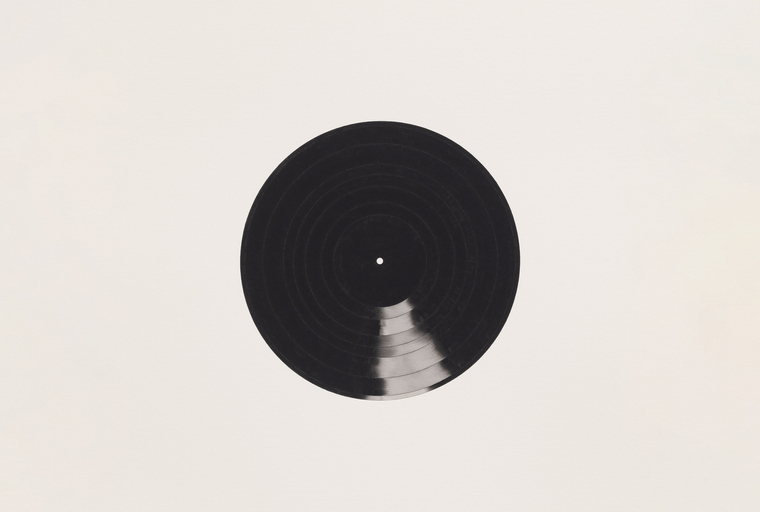
Iran do Espírito Santo’s multidisciplinary practice involves sculpture, drawing and installations. While investigating the space between the concrete and the abstract, he questions the limits of visual representation and the perceptive habits typical of the contemporary optical regime, which tends to privilege the spectacular over the commonplace. His procedure always aims at an architectural project and its realization, with the prefabricated aspect of many of his objects remitting to the compositional style of industrial design. The distillation of forms to their basic elements seems to return the objects to a neutral state, where common things are decomposed into lines and planes in space.
Among the artist’s recent solo exhibitions are Peças Frias — O Desenho, Fortes D’Aloia & Gabriel | Jardins, São Paulo, Brazil (2026); Recorrência, Instituto Figueiredo Ferraz, Ribeirão Preto, Brazil (2026); Tracciare il pensiero. 2002-2025, Mazzoleni, Turin, Italy (2025); Trilha, Fortes D’Aloia & Gabriel, São Paulo, Brazil (2024); Iran do Espírito Santo: Janela Reflexiva, Fortes D’Aloia & Gabriel, São Paulo, Brazil (2022); Iran do Espírito Santo e Fred Sandback, Fortes D’Aloia & Gabriel | Carpintaria, Rio de Janeiro, Brazil (2018) and Playground, Art Omi Sculpture Park, Ghent, Belgium (2016).The artist has also participated in the group exhibitions Art as Agency, Irish Museum of Modern Art, Dublin, Ireland (2025); Cinco Ensaios sobre o MASP – Geometrias, MASP – Museu de Arte de São Paulo Assis Chateaubriand, São Paulo, Brazil (2025); Chosen Memories: Contemporary Art From Latin America – Art from the Patricia Phelps de Cisneros Gift and Beyond, MoMA – Museum of Modern Art, New York, U.S.A. (2023); A máquina do mundo: Arte e indústria no Brasil 1901 – 2021, Pinacoteca de São Paulo, São Paulo, Brazil (2021) e Artists Need to Create on the Same Scale that Society Has the Capacity to Destroy: Mare Nostrum, Complesso della Chiesa di Santa Maria delle Penitenti, Venice, Italy (2019).
The artist has works in important public collections, such as Solomon R. Guggenheim Museum, New York, USA; MoMA – The Museum of Modern Art, New York, USA; Fundación Museo Reina Sofía, Madrid, Spain; MOCA LA – Museum of Contemporary Art, Los Angeles, USA; SFMoMA- San Francisco Museum of Modern Art, San Francisco, USA; Instituto Inhotim, Brumadinho, Brazil; Pinacoteca do Estado de São Paulo, São Paulo, Brazil; Irish Museum of Modern Art, Dublin, Ireland; Thyssen-Bornemisza Contemporary Art Foundation, Madrid, Spain; Museo de Arte Latinoamericano de Buenos Aires, Buenos Aires, Argentina; Museu de Arte de São Paulo Assis Chateaubriand, São Paulo, Brazil; Museu d´Art Contemporani de Barcelona, Barcelona, Spain; Pérez Art Museum Miami, Miami, USA; The Israel Museum, Jerusalem, Israel; Museu de Arte Moderna de São Paulo, São Paulo, Brazil; Museo Nazionale delle Arti del XXI Secolo, Roma, Italy; Museu de Arte Moderna do Rio de Janeiro, Rio de Janeiro, Brazil; Museu de Arte Contemporânea da Universidade de São Paulo, São Paulo, Brazil; Museum of Contemporary Art, San Diego, USA; Museum of Contemporary Art Bangkok, Bangkok, Thailand; National Museum of Contemporary Art, Athens, Greece; Museu de Arte Moderna Aloísio Magalhães, Recife, Brazil; Pavilhão Julião Sarmento, Lisbon, Portugal; Instituto Figueiredo Ferraz, Ribeirão Preto, Brazil and Museu de Arte da Pampulha, Belo Horizonte, Brazil.