Sarah Morris
Lady Snowblood
Nov 12, 2026 – Jan 23, 2027
Opening
Nov 12, 6 pm–9 pm
FDAG Barra Funda
Download
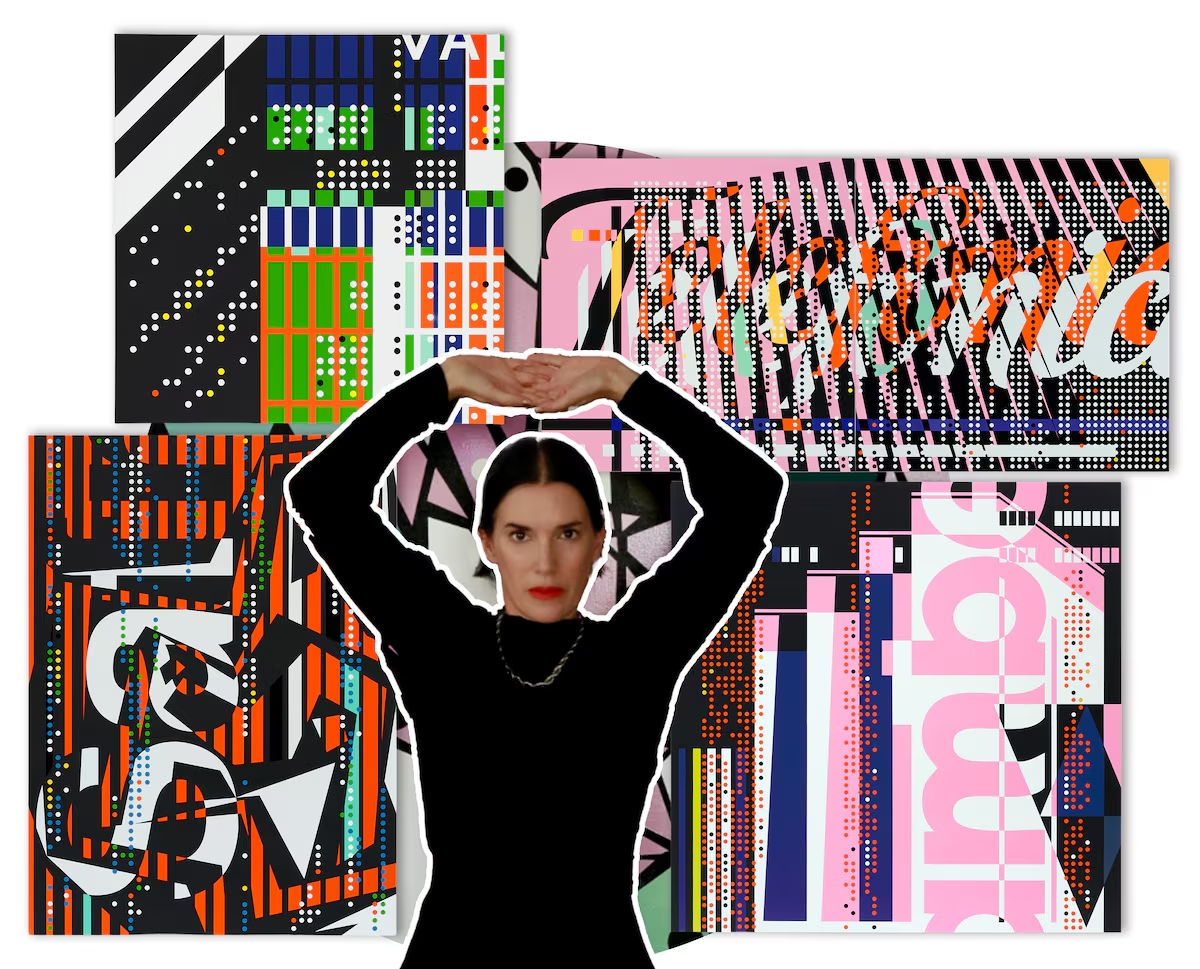
Fortes D’Aloia & Gabriel presents Lady Snowblood, a new solo exhibition by Sarah Morris, opening November 12 at FDAG Barra Funda. Morris has created a new series of paintings developed in relation to Brazil, continuing her investigation into the systems, structures, and visual languages through which power organizes contemporary life.
The new paintings take as their points of departure corporate entities of both Brazilian and multinational conglomerates such as Palantir, Telefônica, Banco Safra, Ambev, Unilever, Klabin, and Vale. A new form of landscape confronts us. Drawing from the bureaucratic and organizational systems associated with these corporations, Morris creates her own unique language visualizing the networks that span telecommunications, finance, consumer goods, paper production, and mining to name a few. Architecture disappears and corporate identity becomes the interface for examining the real and “phantom” flow of capital, data, commodities, and information as well as people.
One painting in the exhibition, “Mirthes Bernardes”, hinges on the artist, architect and civil worker responsible for the design of the pavement of the state of São Paulo that became a defining element of the city’s identity in 1966. Embedded into public space rather than corporate structures, Bernardes’s plan is a radical gesture in Morris’s mind and shows how art and city planning potentially could unite.
Rendered in household gloss paint, Morris’s paintings combine the immaculate surfaces of commercial production with a precise process of construction. Grids, lines, curves, and fields of color evoke diagrams, architectural plans, logos, and information systems coalesce, defying any single image. Detached and fragmented from their original function, these structures are recoded through Morris’s paintings. Morris distils the contradictions of the corporate landscape we inhabit and the systems of power that potentially preside over us – Morris explores the degrees to which we are complicit in them or have agency.
The building has always been the pretext, Morris states. It’s actually the flow of capital and data; that’s the image I’m after. What I want to create is an after-image, an after-taste of this thing that is elusive, that is hard to know where the boundaries start and stop.