![WP00208_Wanda Pimentel_Sem título, da série Animais Preto_Branco _ Untitled, from the Black_White Animals series]_Ph Eduardo Ortega_DDH](https://fdag.com.br/app/uploads/2026/05/wp00208-wanda-pimentel-sem-titulo-da-serie-animais-preto-branco-untitled-from-the-black-white-animals-series-ph-eduardo-ortega-ddh-2360x1328.jpg)
Wanda Pimentel drawings acquired by MoMA
News, May 12, 2026
Wanda Pimentel
Two drawings from Wanda Pimentel’s “Animais Preto e Branco” [Black and White Animals] series (1965–67) have entered the collection of MoMA – The Museum of Modern Art in New York. The acquisition was made through Fortes D’Aloia & Gabriel, the gallery representing the artist’s estate. Produced during a formative period of experimentation, the works belong to a body of work presented for the first time in the artist’s 2025 exhibition at Carpintaria, Fortes D’Aloia & Gabriel’s space in Rio de Janeiro.
This marks the museum’s second acquisition of works by Wanda Pimentel, following the incorporation of a painting from her “Envolvimento” series into the MoMA collection in 2024.
“This acquisition reinforces Wanda Pimentel’s presence within the MoMA collection and represents an important recognition of the singularity of her practice. Seeing this group of drawings from the 1960s enter the museum’s collection highlights the experimental strength of a body of work that was fundamental to the development of a deeply Brazilian and Latin American pop language. It also marks a significant step in the international recognition of Wanda Pimentel as one of the great female voices of twentieth-century art.” — Alexandre Gabriel, partner and director of Fortes D’Aloia & Gabriel.
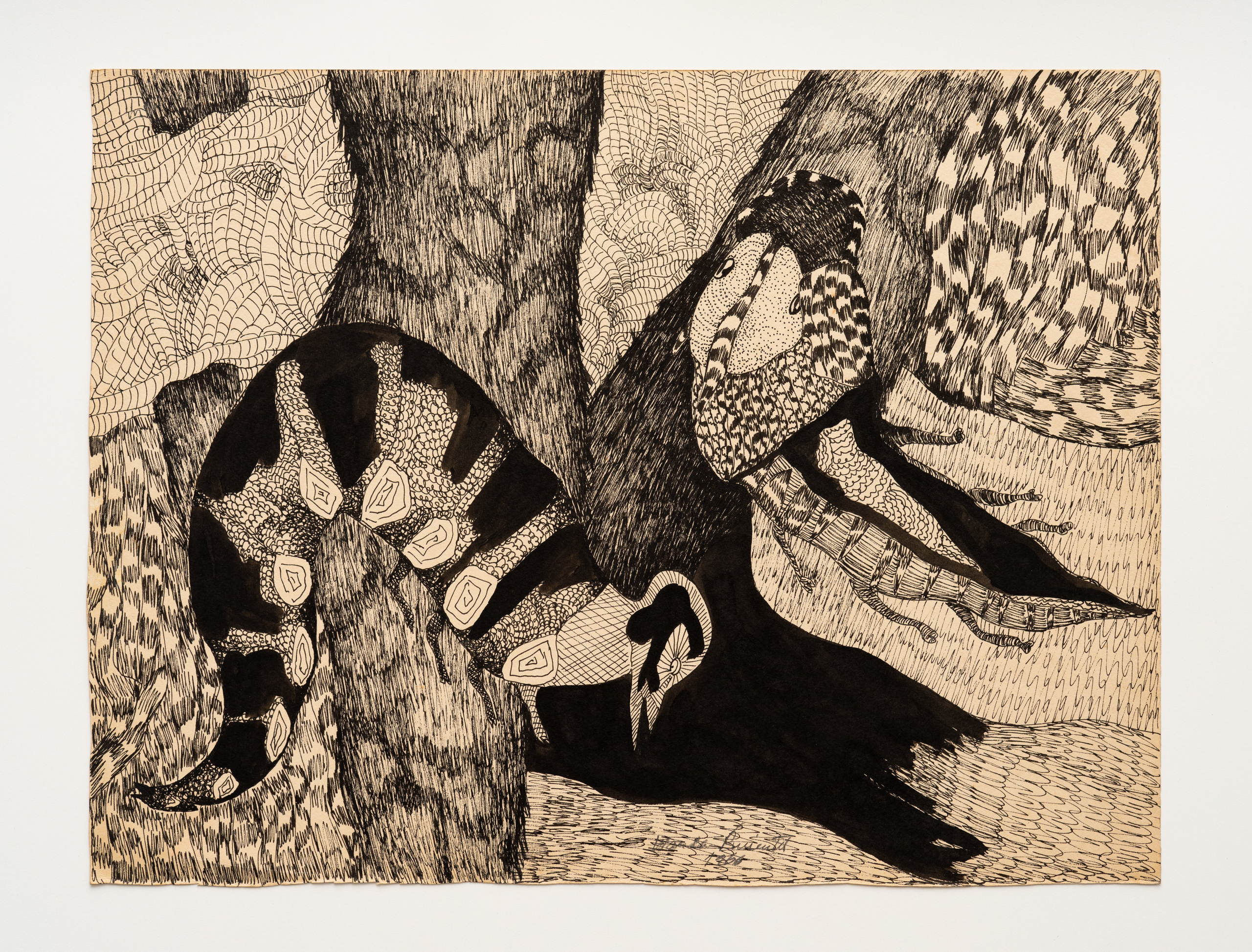
WANDA PIMENTEL, Untitled from the series Animais Preto e Branco, 1966
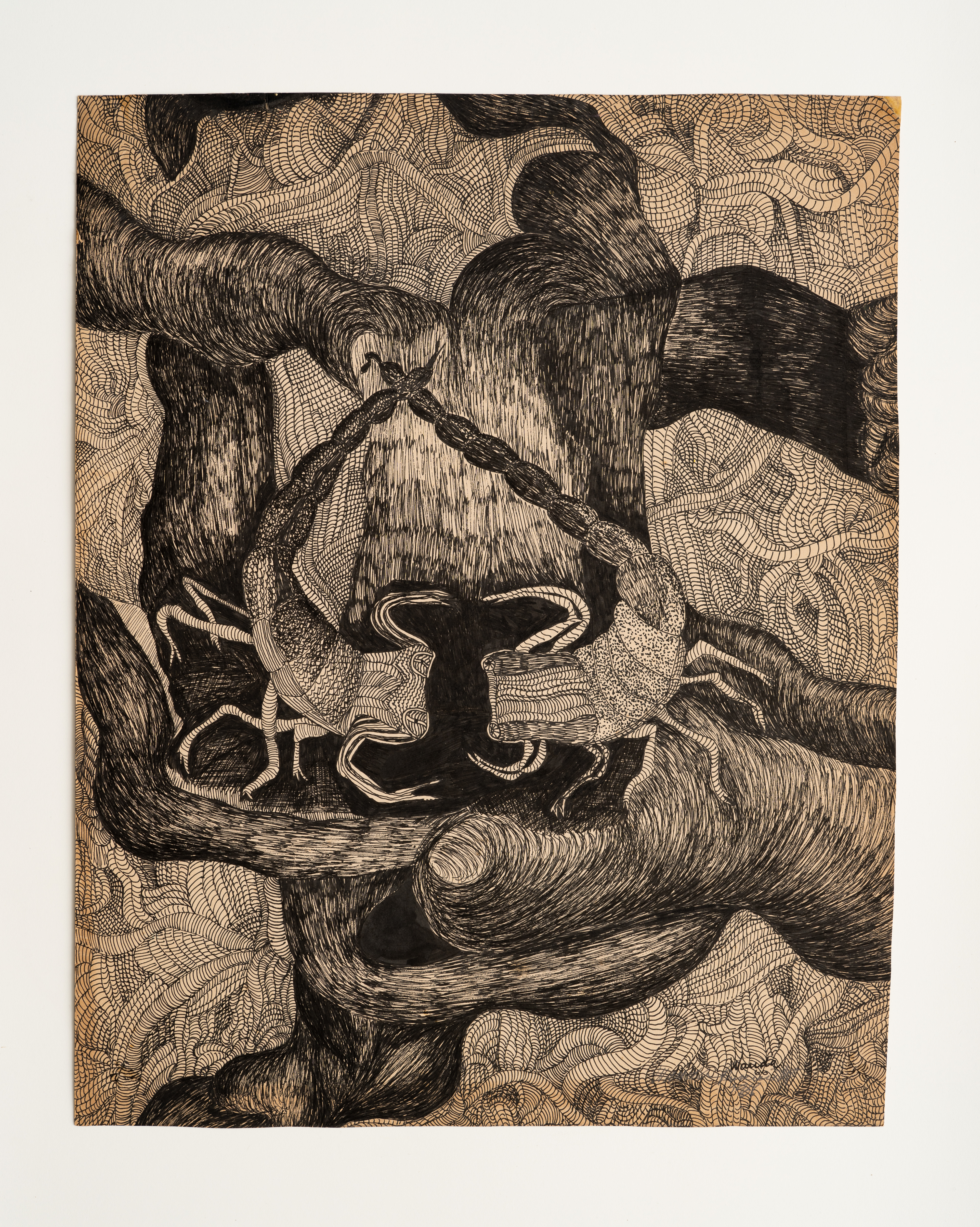
WANDA PIMENTEL, Untitled from the series Animais Preto e Branco, 1966
About the artist
Wanda Pimentel was born in Rio de Janeiro in 1943, where she lived until her death in 2019. Pimentel’s practice is distinguished by a precise, hard-edge quality encompassing geometric lines and smooth surfaces in pieces that often defy categorization as abstract or figurative. In the late 1960s and early 1970s, her paintings depicted domestic spaces and everyday objects in bright colors, in stylistic alignment with Brazilian new figuration. In the following decades, the artist introduced the surrounding Carioca landscape into her formal arrangement, depicting mountains and vistas seen from a window-like frame; she constructed sculptures of manhole covers, directing her gaze downward into hidden environments and painted sequences of geometrically rendered animals, widening her scope to include nonhuman figures.
The beginning of Pimentel’s trajectory coincides with the onset of a long period of oppression and state-sponsored violence in Brazil after 1964, when the military dictatorship was instituted and took hold through 1985. The parallel highlights how her work both reacts to and undermines the stifled atmosphere felt throughout so-called “years of lead”, marked by increasingly insulated communities, conservative societal values, steep political barriers and a turbulent relationship to national identity. In this sense, Pimentel’s work functions as a visual code wrought under oppressive conditions as much as a map toward resignifying isolation.
Internationally, the work of Wanda Pimentel has been featured in some of the most significant exhibitions dedicated to revisiting postwar Latin American art, including Radical Women: Latin American Art, 1960–1985 at the Hammer Museum and the Brooklyn Museum, as well as International Pop, organized by the Walker Art Center and traveling to the Philadelphia Museum of Art and the Dallas Museum of Art. More recently, her work has appeared in exhibitions such as Vital Signs: Artists and the Body at MoMA – The Museum of Modern Art and Pop Brasil: vanguardia y nueva figuración, 1960s–70s at the MALBA – Museo de Arte Latinoamericano de Buenos Aires. In Brazil, major presentations of her work include Envolvimentos at the MASP – Museu de Arte de São Paulo Assis Chateaubriand, alongside recent exhibitions organized by Fortes D’Aloia & Gabriel in São Paulo and Rio de Janeiro, reaffirming Pimentel’s central place in the history of Brazilian contemporary art.